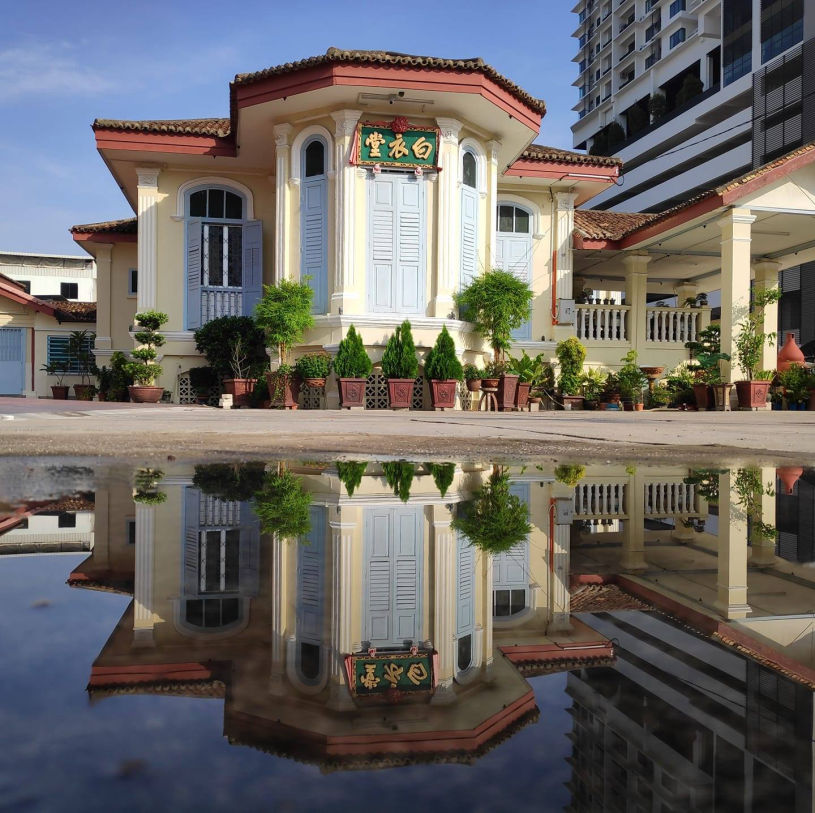
The temple of Pek Ee Tong was set up in 1952 by Venerable Xian Lin who passed away in 1960. It was succeeded by Venerable Zong Jing until her passing in 2012. The temple was then passed to Kek Lok Si and was left vacant for a few years in search of a suitable candidate to carry on the legacy of Pek Ee Tong. Under predestined fate, Pek Ee Tong was handed over to Venerable Kai Xun as the first Abbot on 12 November 2017 by Venerable Ri Heng, the Abbot of Kek Lok Si.
Since Venerable Kai Xun being promoted as the Abbot of Pek Ee Tong, he played a very important role in promoting Buddhism to serve the residents of Jelutong by holding regular chanting prayers such as Lotus Sutra,Shurangama Sutra,Ten Wheel Sutra of Ksitigarbha and Emperor Liang Repentance etc.
Dharma class was also held on every Saturday where Venerable Fa Yao was invited to propagate sutras which include Ten Wheel Sutra of Ksitigarbha,Vajra Prajna Paramita Sutra,Emperor Liang Repentanceetc. In hope that more Buddhists can listen and understand the Buddha Dharma. Thus, they may put the Dharma into their practice and more true believer can be cultivated.
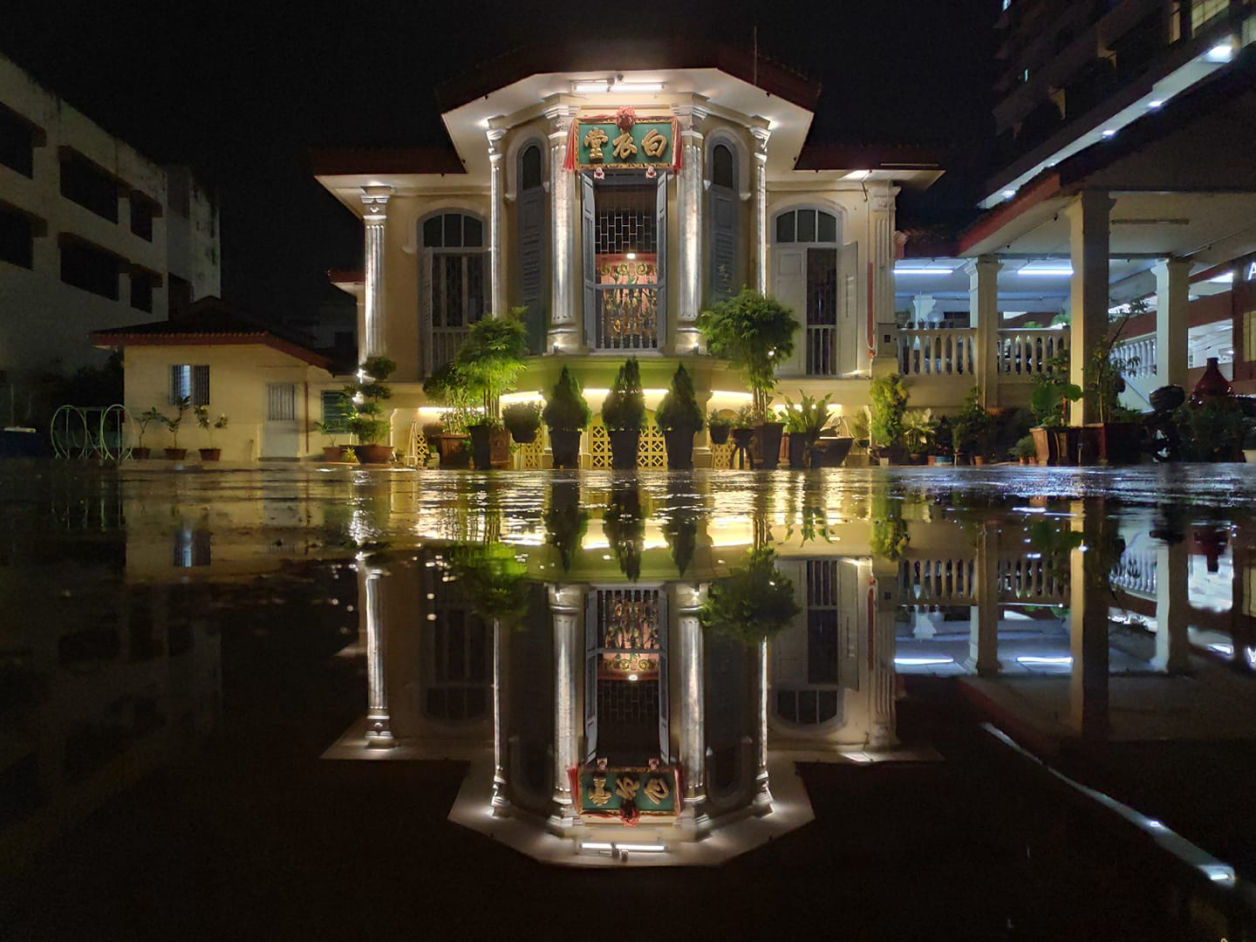
Beside promoting Buddhism, Venerable Kai Xun also upgraded the appearance of Pek Ee Tong such as planting flowers and plants to beautify the compound, at the same time, giving a touch of greenery to the temple's surroundings. The original wire fencing was converted into a concrete fence with the renovation work which started on 19 September 2019 with the Thousand Hands Avalokitesvara statues imprinted on the tiles. The project was completed on 20 March 2020 resulting in Pek Ee Tong looking more solemn.
Founder of Pek Ee Tong —— Venerable Xian Lin
Venerable Xian Lin received her higher ordination at Kek Lok Si in 1948. She had a very strong faith in Avalokitesvara Bodhisattva, so she vowed to convert the purchased land into a temple to worship Avalokitesvara Bodhisattva. She faced several difficulties with land purchase procedures, but after successfully completing the construction project of Pek Ee Tong, her health began to deteriorate and she passed away on April 25, 1960. This temple was then succeeded by her daughter, Venerable Zong Jing
Head of Pek Ee Tong (1961-2012)—— Venerable Zong Jing
Venerable Zong Jing was the eldest daughter of Venerable Xian Lin before she became a nun. She received her higher ordination at Kek Lok Si Temple in 1948 together with her mother Venerable Xian Lin. In 1961, she succeeded her mother in managing Pek Ee Tong until her passing on April 8, 2012, at the age of 87.
The current Abbot of Pek Ee Tong —— Venerable Kai Xun
- Venerable Kai Xun was born in Kedah, Malaysia in 1986.
- In 2009, he was ordained by the Abbot of Hong Hock See Temple, Venerable Wen Jian, and he was given the name " Kai Xun".
- In 2011, he received his higher ordination at Yuan Tong Temple in Puli, Taiwan.
- Venerable Kai Xun graduated from Malaysia Buddhist Institute in 2014.
- In 2016, Venerable Ri Heng passed on the Dharma heir to Venerable Kai Xun. He was given another Dharma name-- 'Jin Yuan', and he was the 50th fiftieth of Cao Dong’s Dharma heirs.
- In 2017, he was selected to be the first Abbot of Pek Ee Tong and has held the post to the present.
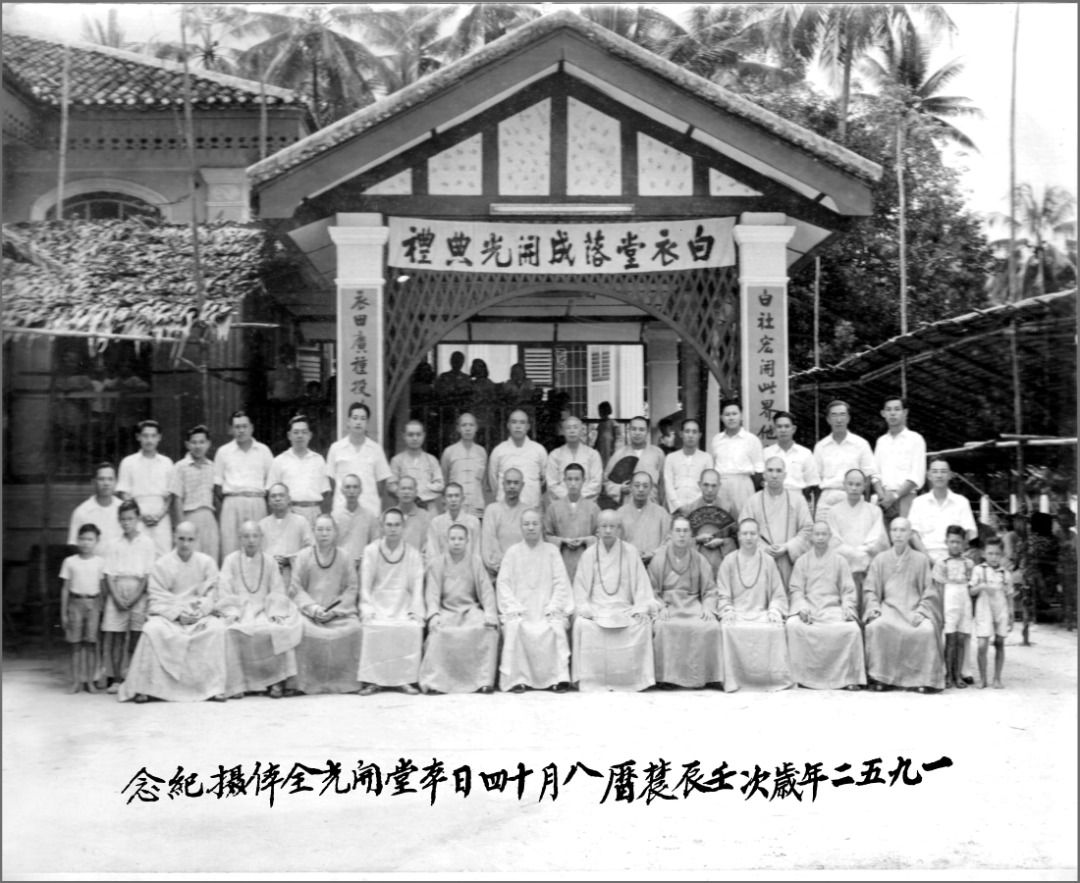
Many prominent monastics in Penang attended the opening ceremony of the inauguration of Pek Ee Tong. From the photo above, it was found that the attendees included: Venerable Zhi Kun, the abbot of Kek Lok Si Temple at that time, Venerable Zhen Guo, Venerable Qing Yuan, and Venerable Ming De.
In 1947, Venerable Xian Lin bought the building and converted it into a self-study place. After Venerable Xian Lin obtained the land deed, she held the opening ceremony of the inauguration of Pek Ee Tong on the 14th day of the eighth lunar month of the lunar calendar. Although Venerable Xian Lin and Venerable Zong Jing at that time were upholding the Bhikkhuni precepts, there was no restriction on shaving their heads, so they tied up their hair. Until they pass away, bhikkhunis will shave their heads to present the ordination image as nuns. This is a unique phenomenon of Chinese Buddhism in the early Nan Yang, and these people are called "A Gu".
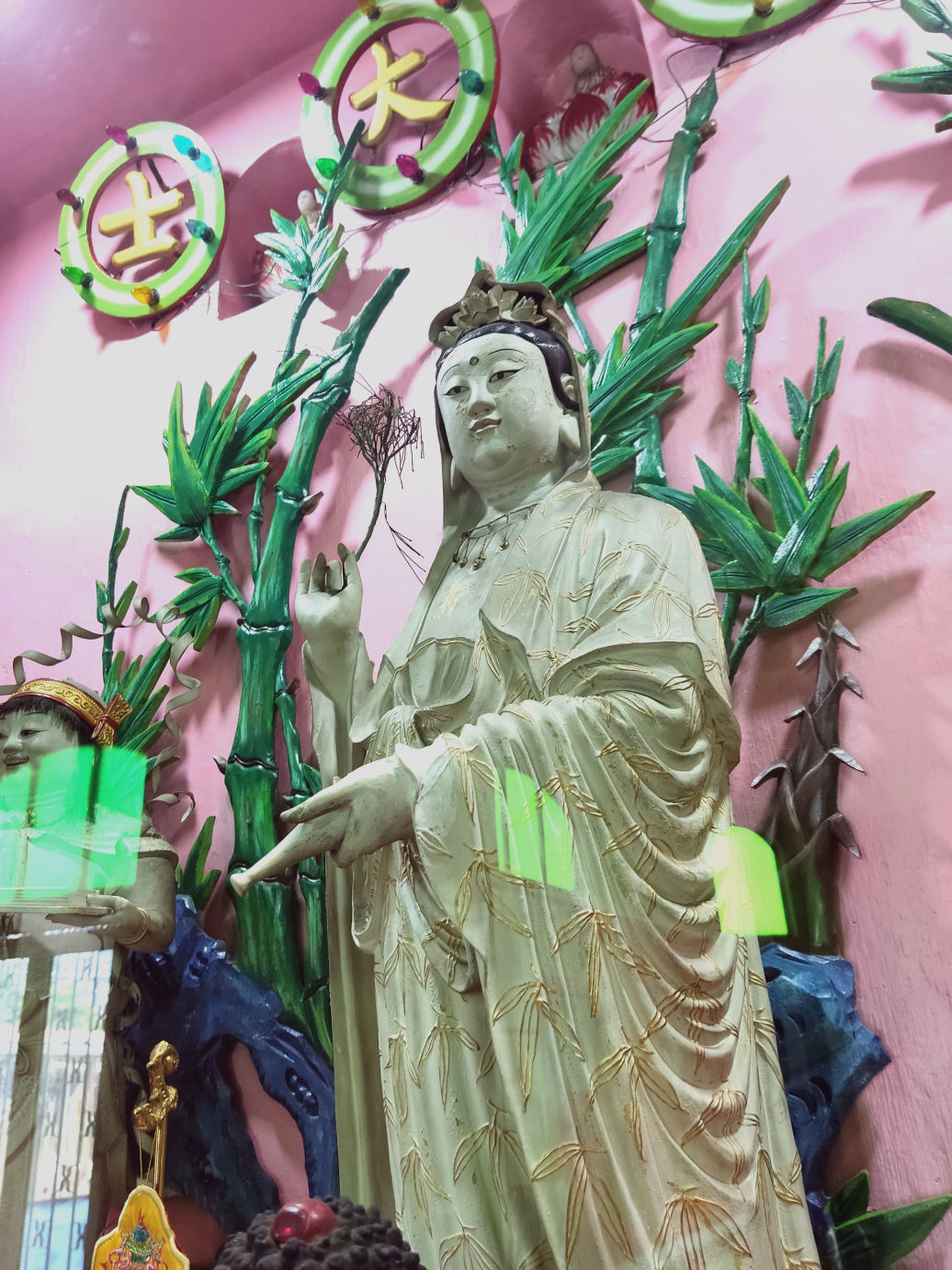
According to the records of Venerable Zong Jing, the Avalokitesvara Bodhisattva statue in the shrine hall of Pek Ee Tong was shaped accordingly to Venerable Xian Lin's dream. There were many difficulties in the process of shaping the statues. After a long search in several places, finally, they found a sculptor at the foot of the Kek Lok Si Temple mountain. The sculptor was old and refused Venerable Xian Lin's request initially. Though, he finally agreed after continuous persuasion. Before the start of the craftwork, prayer and incense were offered in the hope that the image of the Bodhisattva he created would meet the request of Venerable Xian Lin. Finally, the Bodhisattva that the sculptor created was exactly the same as the image in Venerable Xian Lin's dream.
1. On the 26th day of the first lunar month, on the opening day of the Avalokitesvara Bodhisattva, red envelopes are placed in front of the bodhisattva altar in the hall. The believers will toss a pair of moon block divinations in front of the Bodhisattva, seeking permission to borrow red envelopes in the hope of a more prosperous year ahead with the promise to repay back the next year. This event became popular as the borrowed red envelopes were said to bless wealth.
2. Devotees ask for signed poems. The signed poems are divided into two categories: First, there are 60 poems for ordinary questions. The content of the signed poems is the same as Penang Kong Hock Kong Kwan Yim Teng and Burma Road Kuan Im See. Second, there are 60 medicine swabs. At the time of underdeveloped medicine, medicine swabs have become one of the choices for auxiliary medical care. The poems signed by Pek Ee Tong are said to be the most effective. Many believers who have problems will ask for the poems signed by the Avalokitesvara, hoping to solve the current predicament.
3. In the deed, parents will bring their newborn baby to Pek Ee Tong, pray in front of the Avalokitesvara Bodhisattva, and hope the Bodhisattva will bless the baby to grow into an successful adult .
4. The seven-star lamp is mainly used to pray for peace and health.
5. Joss paper was sold after the nun recited the rebirth mantras and incense sticks were used to poke holes in the Joss paper. It is said that the Joss paper recited by Pek Ee Tong is the most effective and popular.
6. Free vegetarian meals are served on the first and fifteenth day of every month in the lunar calendar
The first two traditions are still popular. The seven-star lamp has been replaced by Annual Lighting. The tradition of Joss Paper has been abolished.
Copyrights
  Reserved